
Solar vs battery vs plug-in Christmas lights
In a British December, the power source matters more than the bulbs.
The short answer
For your main display, use plug-in (mains) lights. They’re the brightest and most reliable, run on a timer, and cost pennies to run with LEDs.
Battery lights are for spots with no socket — wreaths, planters, the gate. Solar lights are the least reliable in a UK winter: short, often overcast days mean they may only glow for part of the evening. Treat them as a bonus, not the main event.
Side-by-side comparison
| Plug-in (mains) | Battery | Solar | |
|---|---|---|---|
| Brightness | Brightest | Moderate | Lowest, varies day to day |
| Reliability in December | Every night | Good until batteries fade | Weather-dependent |
| Running cost | Pennies for LED sets | Ongoing batteries (use rechargeables) | Free |
| Where it works | Near a socket or outdoor socket | Anywhere | Anywhere the panel sees daylight |
| Timer | Common | Common (e.g. 6h on / 18h off) | Dusk sensor |
| Best for | House fronts, trees, main display | Wreaths, planters, gates | Garden borders, extra sparkle |
What do plug-in LED lights cost to run?
Very little. As an example, a set drawing 5W, on for 6 hours a night for 5 weeks, uses about 1kWh — roughly 25–30p at typical UK unit rates. Check the wattage on your set’s adapter and your own tariff for an exact figure.
Why solar struggles in a UK winter
Solar lights charge from daylight, and in December the UK gets its shortest, dimmest days, often under cloud. Many solar sets will light up for a shorter time than their summer rating suggests. They’re fine for a garden border; don’t rely on them for the front of the house.
Staying safe outdoors
- Use lights rated for outdoor use (look for an IP rating such as IP44 or higher).
- Keep plugs and adaptors indoors or in a weatherproof outdoor socket.
- Don’t trap cables in windows or doors, and switch off overnight (a timer does it for you).
Picks for each power source
Ollny 20m 200 LED warm white
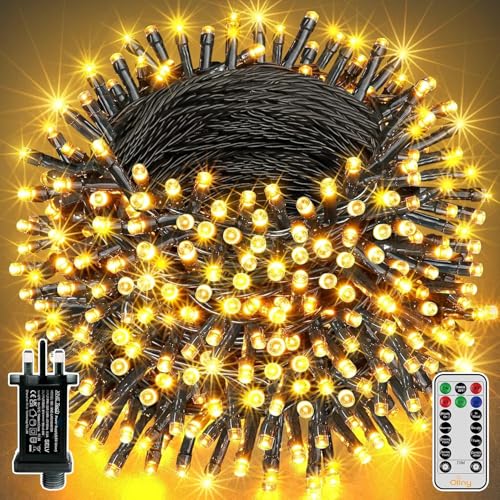
IP44 outdoor rated, remote, timer and four brightness levels.
£12.99£12.99–£16.99 since 8 SepOllny 20m 200 LED multicolour
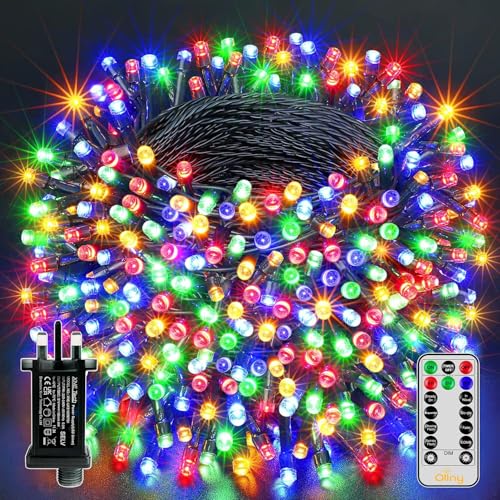
The same set in multicoloured, with 8 modes and dimming.
£14.44FFZZKJ battery lights, 2 × 50 LED
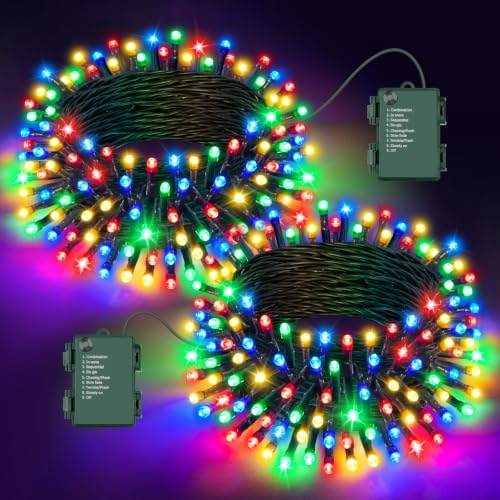
Two 5m multicoloured strings with a 6-hours-on timer; IP65 battery box.
£5.99bitjam solar string lights, 2-pack
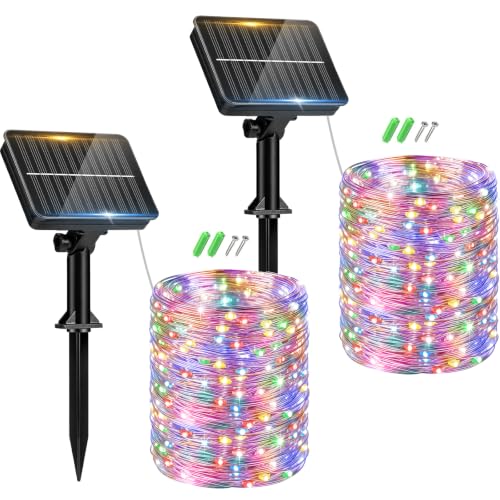
Two 12m, 120-LED coloured strings with 8 modes and IP65 rating.
£8.69Prices update hourly from the Amazon API.
Frequently asked questions
Do solar Christmas lights work in the UK in winter?
They work, but less reliably. Short, often overcast December days limit charging, so many solar sets glow for less time than advertised. They're best as extra garden sparkle rather than your main display.
Are battery Christmas lights worth it?
Yes for places without a socket, such as wreaths, planters and gates. Choose a set with a timer so the batteries last, and use rechargeable batteries to cut the running cost.
How much does it cost to run plug-in LED Christmas lights?
Very little. A set drawing 5W for 6 hours a night over 5 weeks uses about 1kWh, roughly 25 to 30p at typical UK unit rates. Check your set's wattage and your tariff for an exact figure.
Can I leave outdoor Christmas lights on overnight?
It's safest and cheapest to switch them off overnight. Most plug-in and battery sets have a built-in timer that switches them off after a set number of hours.
More Christmas comparisons
- Real vs artificial tree
Artificial if you’ll keep it 10+ years (Carbon Trust); otherwise a real tree you recycle.
- Pre-lit vs unlit tree
Pre-lit for the fastest set-up; unlit to last longest and choose your own lights.
- Warm white vs multicoloured lights
Warm white for a classic look; multicoloured for fun; cool white for an icy, modern scheme.
How we compare: we don’t lab-test products. Comparisons are based on published specifications, manufacturer information and independent data such as Carbon Trust figures, and prices are pulled live from Amazon UK. About ChristmasReady.